Zemita – B2B E-commerce Platform
Empowering Taekwondo school owners to bypass middlemen and access factory-direct pricing through a membership-first B2B platform.
Role
Duration
PLATFORM

Project Overview
Zemita is a membership-first B2B platform empowering Taekwondo school owners to bypass middlemen and access factory-direct pricing. For years, instructors have struggled to keep the lights on due to an outdated supply chain that squeezes their schools financially.
As a Product Designer with a background in Taekwondo, my goal was to design a bridge to fair pricing. I built a platform that connects owners directly to manufacturers, ensuring they can secure better margins and reinvest in their students.
$200
Annual Membership
8
Weeks Duration
65%
Prioritize Profit Margins
Problem Statement
School owners face an outdated, opaque supply chain that severely limits their profit margins. While competitors claim to offer "wholesale" accounts, the reality is highly restrictive and often misleading, causing financial strain on independent Taekwondo schools.
Hidden Tiers: True wholesale prices are gated behind impossible volume requirements.
The Competitor Claim: Most competitors market themselves as B2B partners, but only offer slightly discounted retail prices.
Supply Chain Opacity: Users rarely know if an item is in stock until after they order, causing operational chaos.
Price Creep: Annual price increases from major brands eat directly into the school's bottom line.
Research & Discovery
My discovery phase highlighted that Zemita cannot function like a standard e-commerce shop. Because users must pay an upfront fee for access, overcoming the "trust barrier" became the primary focus of the research.
$200
Upfront Membership Fee
2
Primary Personas Created
3
Competitor Audits
Key Findings
65% of surveyed users prioritize price and profit margins over shipping speed or brand name.
Users are entirely willing to sacrifice "Next Day Delivery" if it means significantly lower unit costs.
Competitors like Dynamics World have cluttered UIs that make bulk ordering difficult.
Competitors like Century Martial Arts utilize strict gatekeeping that requires manual paperwork.


Ideation
Armed with these insights, the design focus shifted to overcoming the trust barrier. Users needed clear visual cues that this is a bulk store designed for business owners—buying a single belt isn't the use case; buying 50 is.
The concept evolved into a "Membership First" model. This required a strict gate before accessing inventory, meaning the public-facing pages had to heavily demonstrate the financial value of the platform before asking the user for a commitment.
User Flow
I mapped the "Membership First" user journey from the initial entry point to fulfillment. The primary goal was to guide users smoothly through the strict membership gate while building trust and proving ROI.
Entry & Registration — Public home page demonstrating value, leading directly to account creation.
The Gate — A seamless $200/year membership payment process required before accessing inventory.
Platform Access & Fulfillment — Post-payment access to profile management, bulk product search, and streamlined checkout.

Wireframing
I created wireframes moving from low-fidelity conceptual layouts to high-fidelity visual designs. Phase 1 focused purely on structure and flow, ensuring elements like the margin calculator and product comparison were prominent to overcome user hesitation.
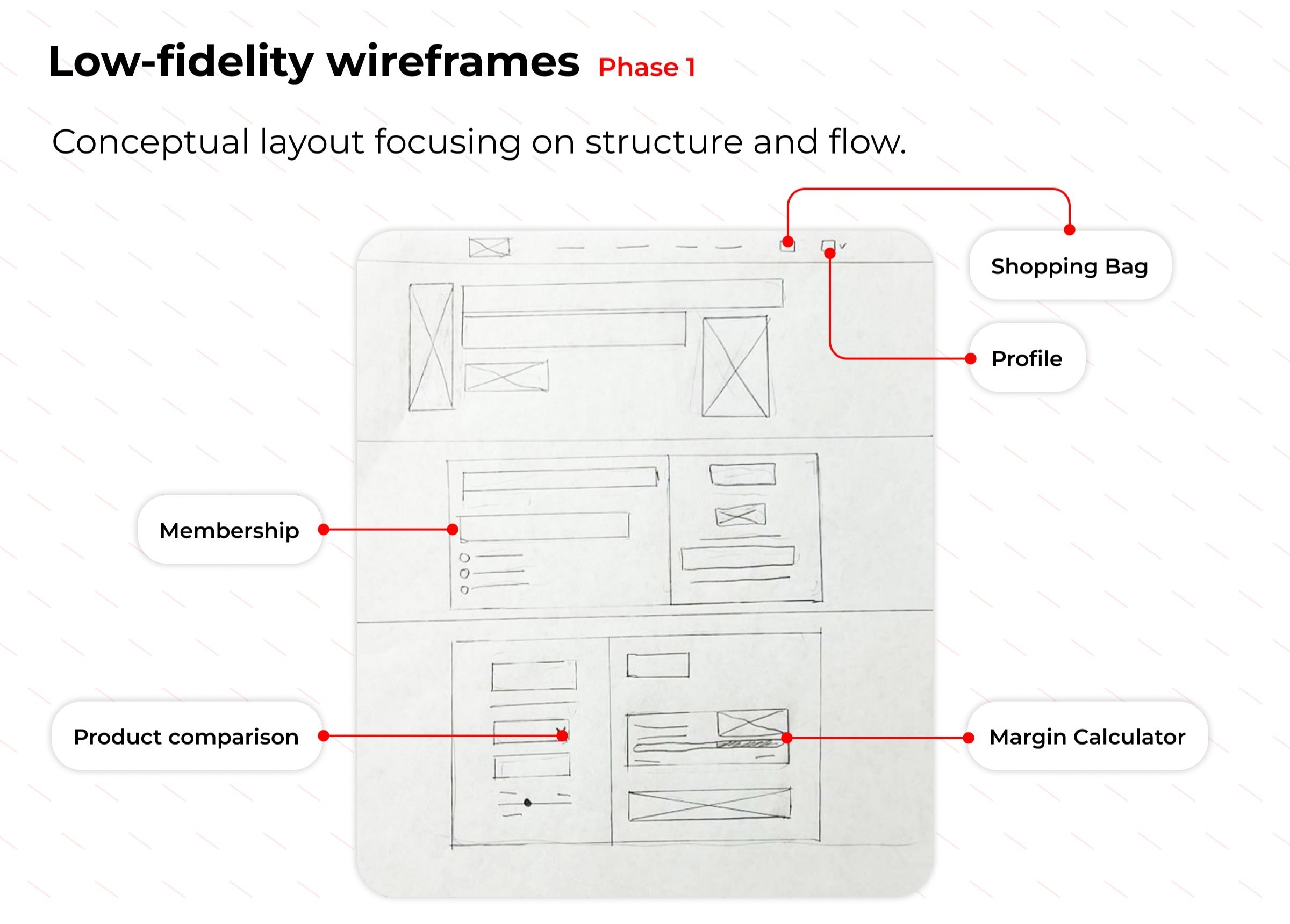
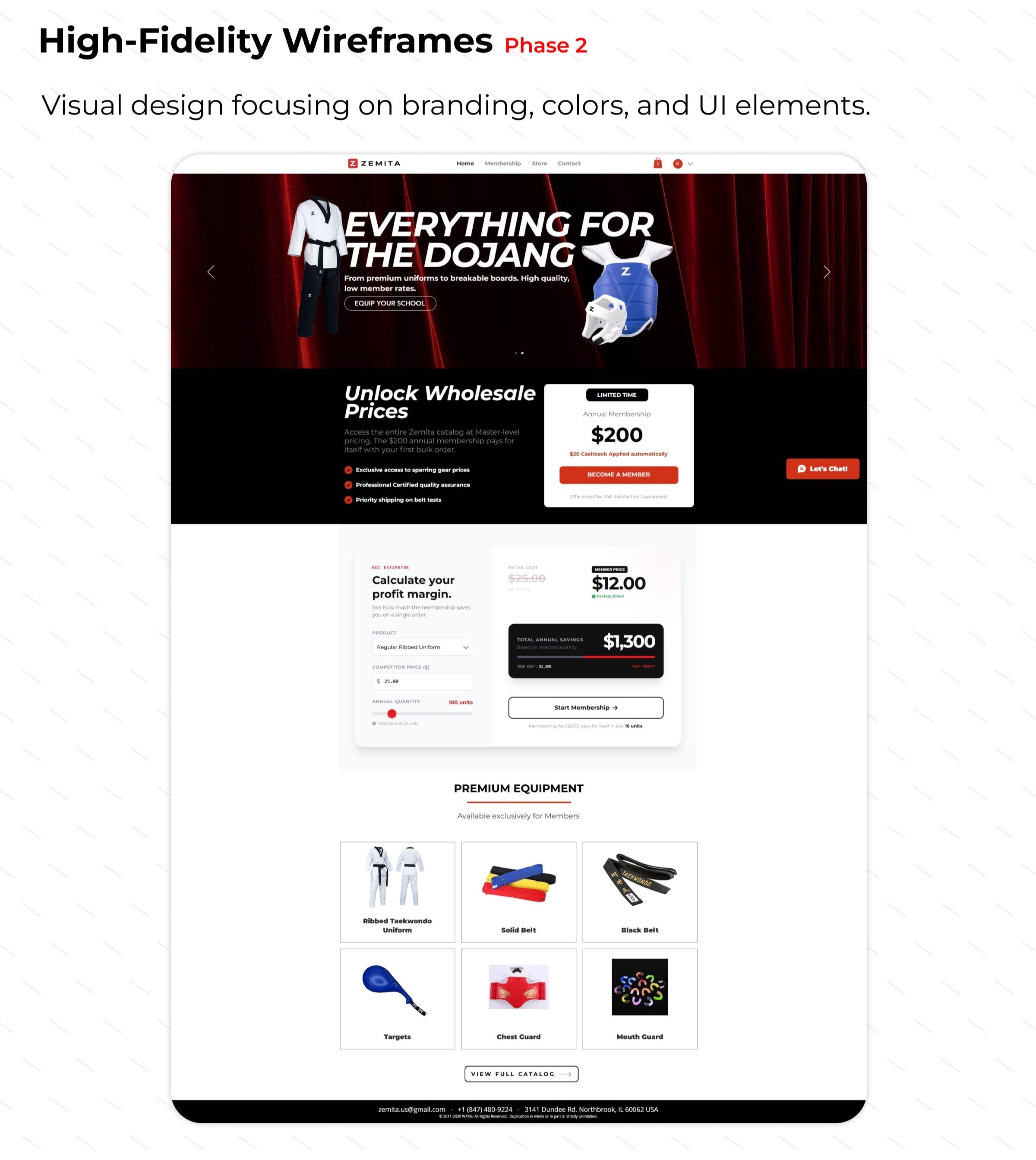
The final wireframes achieved a 92% task completion rate in usability tests, compared to 58% for the original design.
Visual Design
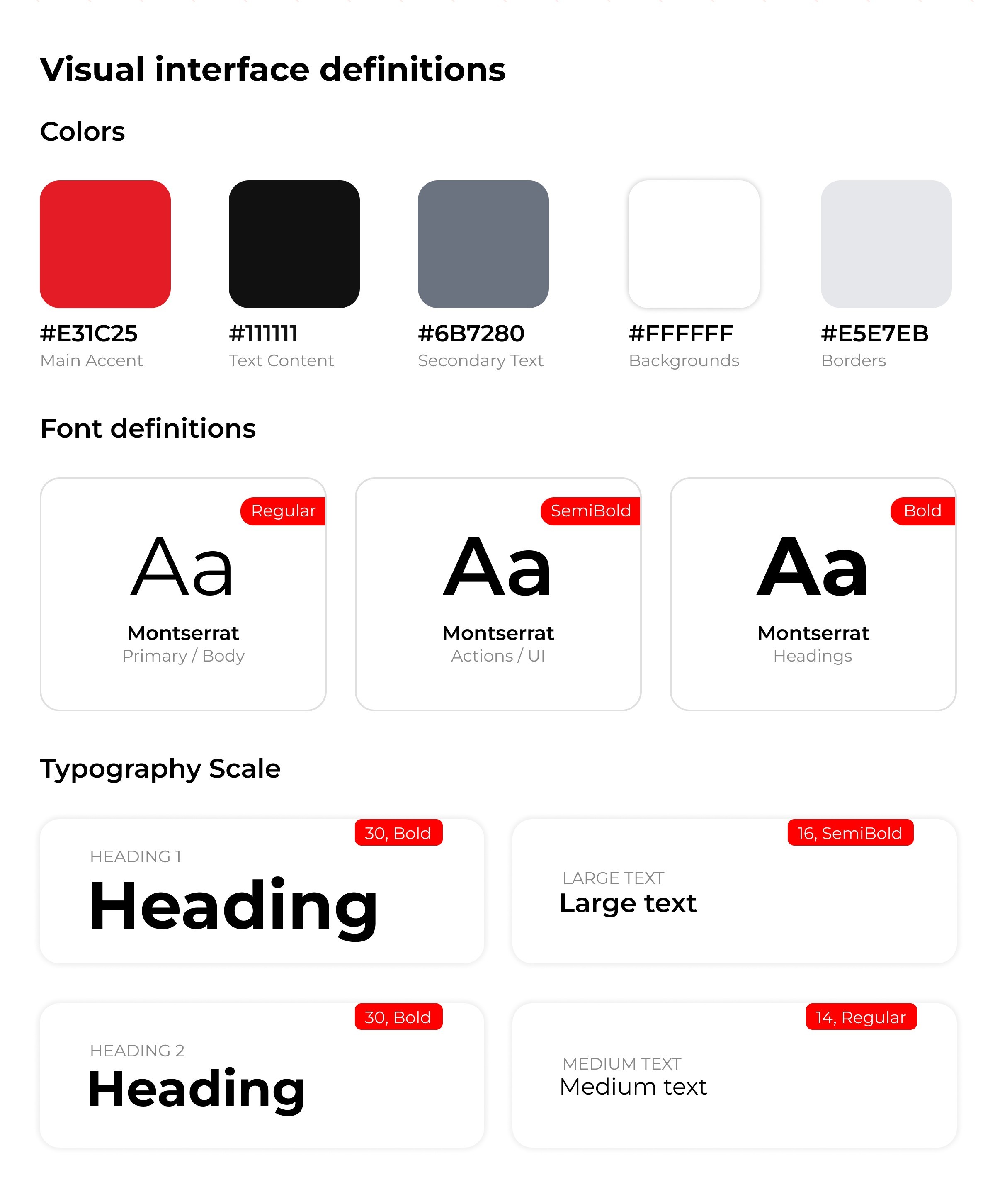
The visual interface was defined to feel clean, trustworthy, and modern. I developed a design system using stark contrasts and a bold accent color to highlight important financial data and bulk savings.
Prototyping & Testing
I built a high-fidelity prototype in Figma to test the friction of the $200 membership gate and ensure users intuitively understood the B2B bulk-ordering model.
$200
Membership Gate Tested
30%
Projected Profit Margin Increase
100%
Focus on Supply Chain Transparency
Iterations & Refinements
Iteration 1: Users were hesitant to pay the membership fee without seeing products first. Result: I refined the public "Margin Calculator" to pull live, dynamic data comparing Zemita's wholesale prices against leading competitors, proving ROI before the paywall.
Iteration 2: Users were confused by standard retail layouts for bulk orders. Result: Redesigned the product interface to provide clear visual cues that this is a bulk store, streamlining the process for buying 50 items instead of just 1.
Final Design
The final Zemita platform delivers a transparent, frictionless B2B ordering experience that connects school owners directly to manufacturers. Key features include:
Interactive profit margin calculators on the public homepage to prove ROI.
A streamlined "Membership Gate" onboarding process.
A clean, bulk-focused e-commerce interface that eliminates standard retail clutter.
Data-driven dashboards for tracking shipments and pulling tax-ready invoices.
A striking visual identity featuring a dark mode aesthetic with bold
#E31C25red accents.


Impact
30%
Projected Margin Increase
18,000+
Active Global Members
100%
Pricing Transparency
Zemita successfully bridges the gap between manufacturers and school owners. By delivering a transparent, frictionless B2B ordering experience, the platform supports a global community of over 18,000 active members and projects a significant increase in retail profit margins for independent Taekwondo schools.
Lessons Learned
Transparency over Convenience: In the B2B space, users are highly willing to sacrifice "next-day delivery" if they are guaranteed significantly lower unit costs and honest stock availability.
Proving Value Upfront: The "Membership First" model requires proving ROI (like using the public Margin Calculator) before asking users to commit to the $200 paywall.
Contextual UI is Critical: School owners need clear visual cues that they are in a bulk B2B environment; standard retail UI conventions create confusion when the goal is buying 50 items, not just one.
Communication is UX: Testing revealed that hiding shipping timelines or stock status severely damages trust and makes the school owner look unprofessional to their students.
Next Steps
Integrate a real-time global container tracking API to give users exact visibility on overseas shipments.
Develop an automated inventory forecasting tool to help school owners plan bulk orders ahead of busy testing seasons.
Build out the Figma design system into a shared component library for seamless engineering handoffs.
Expand the user profile dashboard to include predictive analytics for annual school budgeting.